


Why I write science fiction: the story I never told anyone
Tron, Asimov and Sagan turned a curious child into a writer. The story behind every future I have built since, and why I still write science fiction from a police station.
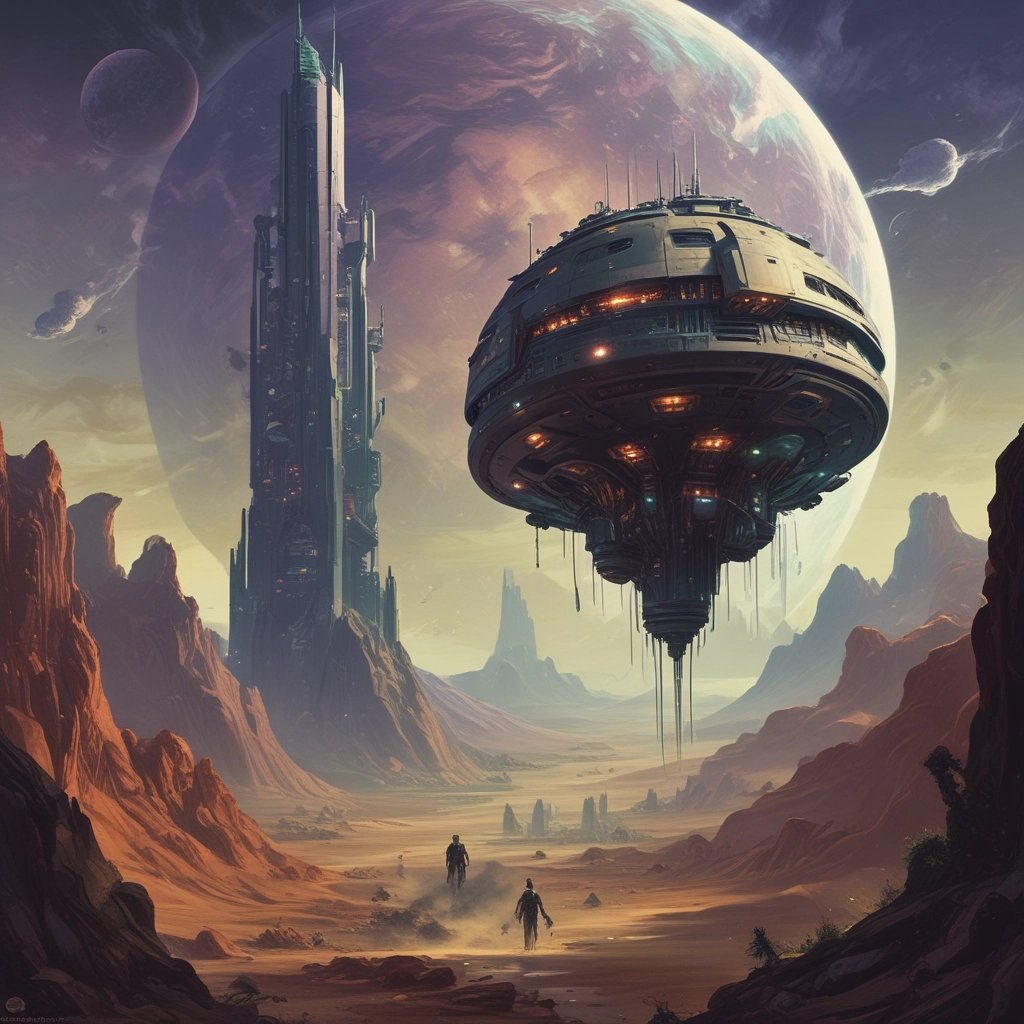

Memories of a childhood marked by science fiction
Has a film ever changed your life with a single image?
It happened to me with Tron. I was only a few years old, and suddenly there it was: a universe of light, data and digital speed. It wasn't just a film. It was a crack between dimensions opening in front of a curious child. Nothing was ever the same again.
There is a case file that does not exist in any police station. I wrote it for readers who want to see how an investigation that has not happened yet gets documented from the inside: what is written down, what is left out, and who decides the latter. It is sent by email, and only to those who ask for it.
Tron: when the screen became a portal
Released in 1982, Tron was not like the rest. It wasn't about monsters, or about ships firing lasers for the fun of it. It was something else: a digital world, bright and geometric, where technology wasn't the backdrop… it was the lead.
I remember how it pinned me to my seat. Those circuits, the light cycles, characters trapped inside a computer network… I came away certain that reality was only one option among many. That others could exist, and that somebody had to tell them. In time, I wanted that somebody to be me.
Asimov, Sagan and the curiosity virus
It wasn't long before I found the books. And then came the giants. Asimov taught me that robots could be human too. That the laws of robotics weren't just a narrative device but a way of thinking about the future. Sagan took me by the hand instead and walked me out into the cosmos. With him I didn't only look at the stars; I learned to ask questions.
“We are made of star stuff,” he said. And from my bedroom in Vitoria, I believed him without question.
Reading them was like wiring two hemispheres together: relentless logic on one side and, on the other, a scientific poetry whispering that anything is possible if you know how to look.
Are we alone? And other questions only science fiction dares to ask
One question has kept me company all my life: are we alone in the universe?
Science still doesn't know. Science fiction does dare to imagine it.
That is where the magic is. This genre doesn't hand out closed answers, it hands out open questions. What if time reset every day? What if an artificial intelligence decided which emotions you deserved to feel? What if humanity couldn't move forward… because it was trapped in its own routine?
All of that is what I explore in my books. Because science fiction isn't only entertainment: it is a torch for the darkest corners of our own minds.
Writing to survive (and to dream)
Today, with every word I write, I am still chasing the awe Tron gave me. I am still interrogating the universe with Sagan's questions. I am still designing futures the way Asimov would, with logic, emotion and a pinch of creative chaos. Because writing science fiction is not escaping reality. It is hacking it. In a world that sometimes looks more dystopian than my novels, building new ones isn't only a passion. It is a necessity. It is my shelter. It is how I carry on dreaming.
And you? Which story changed your life?
Jose M. Aldasoro
Author of The Loop and explorer of imperfect futures
Next read
Two posts that continue this one: How I became a writer of science fiction and What I hate about modern science fiction (and what I miss).
The novel to read next: The Loop, a cyberpunk thriller about temporal anomalies: a world trapped in a 24-hour cycle that everyone is aware of.
